


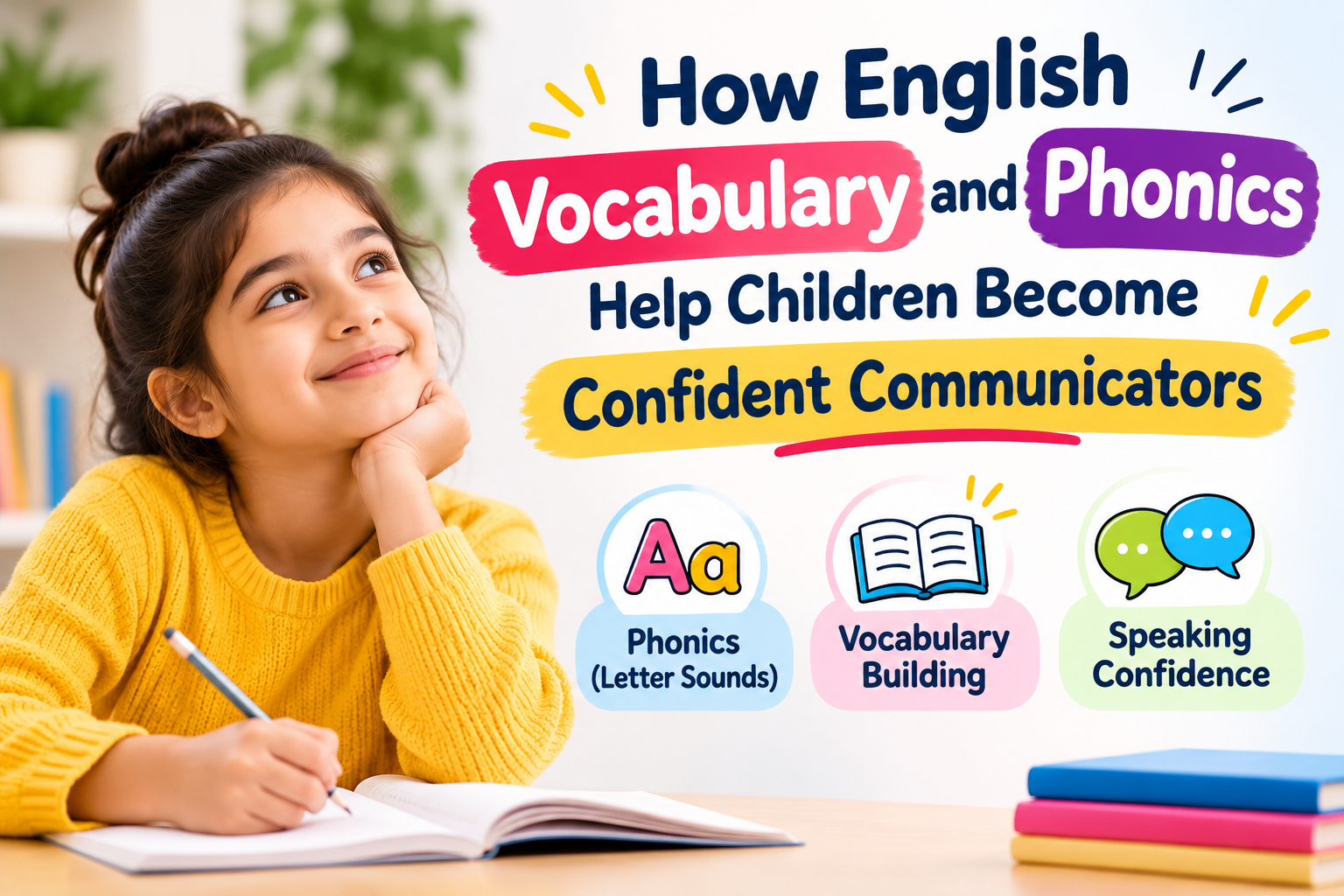
Every parent wants their child to speak English confidently, read new words easily and express their thoughts clearly. However, many children struggle with limited vocabulary, incorrect pronunciation and difficulty recognising letter sounds. They may understand simple English but hesitate when speaking or reading unfamiliar words.
Building a strong English vocabulary and learning phonics can make a big difference. Vocabulary helps children understand and use new words, while phonics teaches them how letters and sounds work together. Both skills support better reading, speaking and communication.
1. How Building English Vocabulary Improves Communication Skills
English vocabulary plays an important role in a child’s overall communication development. When children know more words, they can understand conversations, explain their ideas and express their feelings more clearly. Learning new words also helps them become better readers and confident speakers.
Vocabulary Helps Children Express Their Thoughts Clearly
Children with a good vocabulary can explain what they think, feel and experience without struggling to find the right words. For example, instead of always saying “Good” or “Nice”, they can use words like “Wonderful”, “Amazing” or “Interesting” to express themselves more clearly.
Learning the meaning of new words and using them in sentences helps children communicate their thoughts more effectively at school and at home.
New Words Make Everyday Conversations Interesting
Learning new English words makes everyday conversations more engaging. Children can describe things, share stories and participate in discussions with greater confidence.
Parents can encourage this habit by introducing simple new words during daily activities. For example, while reading a story or talking about their day, children can learn words such as “Beautiful”, “Exciting”, “Delicious” and “Breathtaking”.
Regular practice helps children remember new vocabulary and use it naturally in conversations.
Encourage Everyday Conversations
Give children opportunities to speak English at home. Ask about their school day, favourite activities or friends. Listen patiently and encourage them to complete their thoughts. Correct mistakes gently so they feel comfortable practising without fear.
Phonics Helps Children Improve Reading and Pronunciation
Phonics teaches children the relationship between letters and their sounds. Instead of memorising every word, children learn how to recognise letter sounds and combine them to read unfamiliar words.
For example, when children learn the sounds of C, A and T, they can blend them together to read the word “CAT”. This method helps improve word recognition, pronunciation and reading ability.
Regular phonics practice also makes it easier for children to read new words independently and develop stronger foundational English skills.
Better Vocabulary Builds Speaking Confidence
A child may have good ideas but struggle to express them because of limited vocabulary or fear of making mistakes. When children learn new words and understand how to use them, they become more comfortable speaking English.
A strong vocabulary helps children participate in classroom discussions, answer questions, give presentations and communicate with friends. They gradually learn to form better sentences and express their thoughts without hesitation.
With regular speaking practice, children can improve their fluency, pronunciation and confidence. The goal is not just to memorise English words but to use them naturally in everyday communication.
How Parents Can Help Children Improve Their Vocabulary and Phonics
Parents play an important role in developing a child’s English language skills. Simple activities at home can make vocabulary building and phonics practice enjoyable. Consistency matters more than making children learn too many words at once.
Learn One New Word Every Day
Introduce one new English word every day. Explain its meaning, show an example and encourage your child to use it in a sentence. For example, if the word is “Curious”, ask your child to describe something they are curious about.
Practise Letter Sounds
Help children recognise the sounds of individual letters instead of only learning their names. Start with simple words and encourage them to blend sounds together. Activities such as identifying the beginning sound of objects can make phonics practice easier and more enjoyable.
Read Storybooks Together
Reading storybooks together helps children discover new vocabulary, understand sentence formation and improve reading comprehension. Ask questions about the story and explain unfamiliar words. This also develops their interest in reading.
Play Word and Phonics Games
Learning becomes more interesting when children practise through games. Try word matching, spelling activities, picture-word recognition and letter sound games. These activities help children remember vocabulary and recognise sounds while enjoying the learning process.
4. How All Study Buddy Helps Children Improve English and Phonics Skills
Every child learns at a different pace, so the right guidance and regular practice are important. All Study Buddy supports children’s learning through structured tutoring and activities designed to strengthen their English language skills.
Children can receive support in:
- English Vocabulary Building
- Phonics Classes
- Reading and Pronunciation Practice
- English Communication Skills
- Reading Comprehension
- ESL Classes
- Homework Support
Through guided learning and regular practice, children can gradually improve their word recognition, reading ability, pronunciation and confidence in speaking English.
Online and Offline Learning Options
All Study Buddy offers online and offline tutoring options for children and families in Brampton. Online classes allow children to learn from home with convenient access to tutoring support. They can practise English vocabulary, phonics, reading and other subjects through interactive learning sessions.
For families who prefer face-to-face learning, offline tutoring provides an opportunity for direct interaction and guided practice. Parents can choose the learning option that suits their child’s schedule and requirements.
Why Parents Choose All Study Buddy
Parents want a learning environment where children feel comfortable asking questions, practising new skills and improving at their own pace. All Study Buddy focuses on making learning simple, supportive and engaging.
Some key learning benefits include:
- Personalised learning support according to the child’s level
- Guidance from supportive teachers
- Regular English vocabulary and phonics practice
- Focus on reading, pronunciation and communication
- Online and offline tutoring options
- Support for different learning needs
With consistent guidance and practice, children can strengthen their basic skills and become more confident learners.
Final Thoughts
English vocabulary and phonics are both important for developing strong communication skills. While vocabulary helps children express their thoughts clearly, phonics builds the foundation for reading unfamiliar words and improving pronunciation. Together, these skills help children become better readers, confident speakers and independent learners.
With regular practice at home and the right learning support, children can gradually improve their English skills. All Study Buddy provides online and offline tutoring in Brampton to help children develop vocabulary, phonics, reading and communication skills through guided learning.

