




A lot of students spend years on English grammar, memorizing vocabulary, and doing well on tests, but then they freeze up when it comes to actually speaking. If your child gets English but has a hard time speaking with confidence, it’s not about their intelligence or effort, or even their language skills.
The real problem is that most students learn English as a subject, not as a way to communicate. This is an important distinction.
A student might know tons of grammar rules but still struggle to chat for a couple of minutes, while another who understands the basics might be able to converse fluently because they’ve trained their brain differently.
Recognizing this difference is the first step to helping improve their speaking skills at home.
Why Students Can Read and Write English but Cannot Speak It
A common misunderstanding about learning a language is thinking that reading, writing, listening, and speaking improve at the same rate.
That’s not the case.
Speaking involves a whole different set of cognitive skills.
When students try to speak English, their brain has to:
Understand what’s going on.
Find the right words.
Put together a grammatically correct sentence.
Pronounce everything correctly.
Deliver their message with confidence.

All of this needs to happen in just a few seconds.
For students who don’t practice speaking English often, it can feel really overwhelming. This can lead to hesitation, nervousness, long pauses, and a lack of confidence.
That’s why many students might say, “I know the answer, but I just can’t say it in English.”
The real challenge isn’t about knowing the material—it’s about being able to produce the language.
The Hidden Reason Many Students Never Become Fluent
A lot of schools really emphasize things like:
- Grammar exercises
- Writing tasks
- Memorizing facts
Getting ready for tests
Sure, these skills matter, but they don’t really make someone a fluent speaker.
Fluency mainly comes from actually talking a lot.
Studies in how people learn languages show that students pick up speaking much quicker when they’re having real conversations instead of just memorizing rules.
This is what we call active language output. Basically, the more students chat, the better their brain connections for communication will be.
Advanced Strategies to Improve English Speaking Skills at Home
Create an English Immersion Environment
Language experts often refer to immersion as the fastest route to fluency.
Students do not need to move abroad to create immersion.
Instead:
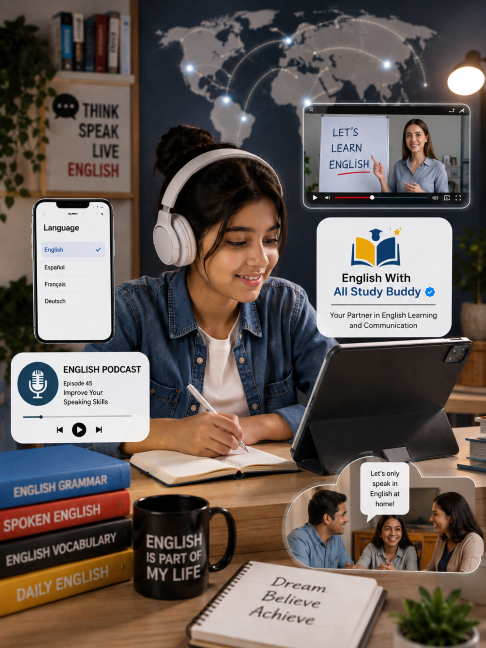
- Change device language settings to English.
- Watch educational content in English.
- Follow English-speaking creators.
- Listen to English podcasts during travel.
- Participate in family conversations using English.
The goal is to make English part of everyday life rather than a school subject.
Focus on Thought Formation Instead of Translation
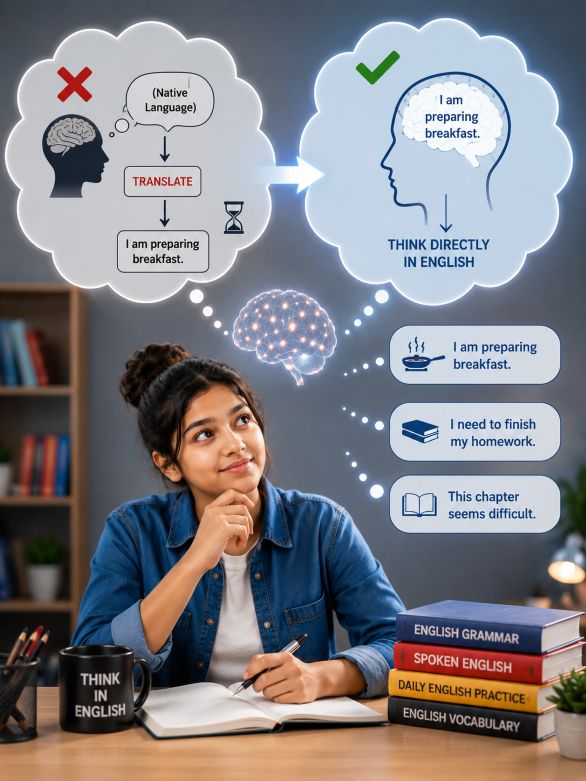
Most students think in their native language and then translate into English.
This habit slows down conversations and creates hesitation.
Fluent speakers think directly in English.
A practical exercise is to narrate daily activities mentally:
“I am preparing breakfast.”
“I need to finish my homework.”
“This chapter seems difficult.”
This trains the brain to generate English naturally.
Use Vocabulary Clusters Instead of Individual Words
Learning isolated vocabulary is inefficient.
Students should learn vocabulary in themes.
For example, when learning about education:
- Assignment
- Presentation
- Deadline
- Research
- Discussion
- Evaluation
This approach improves retention and helps students communicate more effectively in real-life situations.
Practice Retrieval, Not Recognition
Many students recognize words but cannot use them in conversations.
The solution is retrieval practice.
Instead of reading vocabulary repeatedly, students should explain concepts, tell stories, and answer open-ended questions using new words.
This strengthens long-term memory and improves fluency.
How Professional Tutoring Accelerates English Speaking Development
Self-practice is valuable, but progress often plateaus without expert feedback.
Students frequently repeat the same pronunciation mistakes, grammatical errors, and speaking habits without realizing it.
At All Study Buddy, one of the best online and offline tutoring classes in Brampton, students receive structured speaking practice designed to improve fluency, confidence, pronunciation, and communication skills.
Unlike generic language courses, personalized tutoring identifies specific learning gaps and creates customized strategies for improvement.
This targeted approach helps students progress significantly faster than self-study alone.
Final Thoughts
Improving English speaking skills is not about memorizing more grammar rules.
It is about training the brain to communicate naturally, confidently, and consistently.
Students who focus on active speaking, language immersion, vocabulary retrieval, and real-world conversations develop stronger communication skills than those who rely solely on textbooks.
With the right environment, consistent practice, and expert support from All Study Buddy, students can transform English from a difficult subject into a powerful life skill.
FAQs
Students can improve by speaking daily, reading aloud, watching English content, recording themselves, and practicing conversations regularly.
The timeline varies depending on practice and consistency. Most students notice improvement within a few months of regular speaking practice.
Daily speaking practice, vocabulary building, shadow speaking, and professional tutoring are among the fastest methods.
Fear of mistakes, lack of confidence, limited vocabulary, and insufficient speaking practice are common reasons.
Yes. Professional tutoring provides structured learning, feedback, pronunciation correction, and confidence-building exercises that accelerate progress.
All Study Buddy offers experienced tutors, personalized learning plans, online and offline classes, and a student-focused approach that helps learners achieve lasting improvement.

4 Comments
Fantastic blog! All the points discussed above are not only practical but also really helpful for those students who want to enhance their English speaking skills from the comfort of their homes. The part about building confidence really appealed to me.
Great blog! The article explains English speaking tips in a very simple and easy-to-understand way. The suggestions are practical and helpful for students who want to improve their speaking skills at home. Study Buddy always provides useful learning content, and this blog is no exception. Highly recommended for students looking to build confidence in English communication.
This blog is really good and helpful. The tips, in this blog can help students learn to speak English at home. Students can improve their English speaking skills naturally and effectively from home by following these strategies. The blog has some useful ideas that can help students speak English better.
This article is really great. The methods you shared to improve English speaking at home are very easy, especially the tip about practicing in front of a mirror and talking about small things daily, which I really liked. This blog is very helpful for students who are unable to speak English. Thank you for sharing such a nice blog. 😊